Building a clothing brand takes enormous effort — developing your identity, finding a manufacturer, growing a customer base. A trademark is the legal mechanism that protects that investment. Without one, a competitor can register your brand name before you do, forcing you to rebrand or pay to buy it back. With one, your brand name and logo are legally protected in every market where you have registered.
This guide explains what a clothing brand trademark is, why you need one, and exactly how to register it — in the USA and internationally.
What Is a Trademark?
A trademark is a legally registered symbol, word, phrase, or combination that distinguishes your brand’s goods and services from those of competitors. For a clothing brand, trademarks typically cover your brand name, logo, and in some cases your distinctive visual style or tagline. Once registered, a trademark gives you the exclusive right to use that mark in commerce within the registered category (in your case, clothing and accessories).
Why Do Clothing Brands Need a Trademark?
As you grow — whether through your own e-commerce store, wholesale partnerships, or an Amazon storefront — your brand name becomes increasingly valuable. Without a trademark, you have limited legal recourse if a competitor uses a confusingly similar name or design. A trademark is also required for brand registry on Amazon, which unlocks brand protection tools, A+ content, and sponsored brand advertising. It also strengthens your brand’s commercial value if you ever seek investment or wish to sell the business. Whether you are just starting a clothing brand or scaling an established label, trademarking early is always better than waiting.
What Can You Trademark for a Clothing Brand?
- Brand name — the word or words used as your brand’s name
- Logo — your visual brand mark (registered separately from the name)
- Tagline or slogan — if it is distinctive and consistently used in commerce
- Unique design elements — distinctive graphic patterns or prints that define your brand
How to Register a Clothing Brand Trademark in the USA
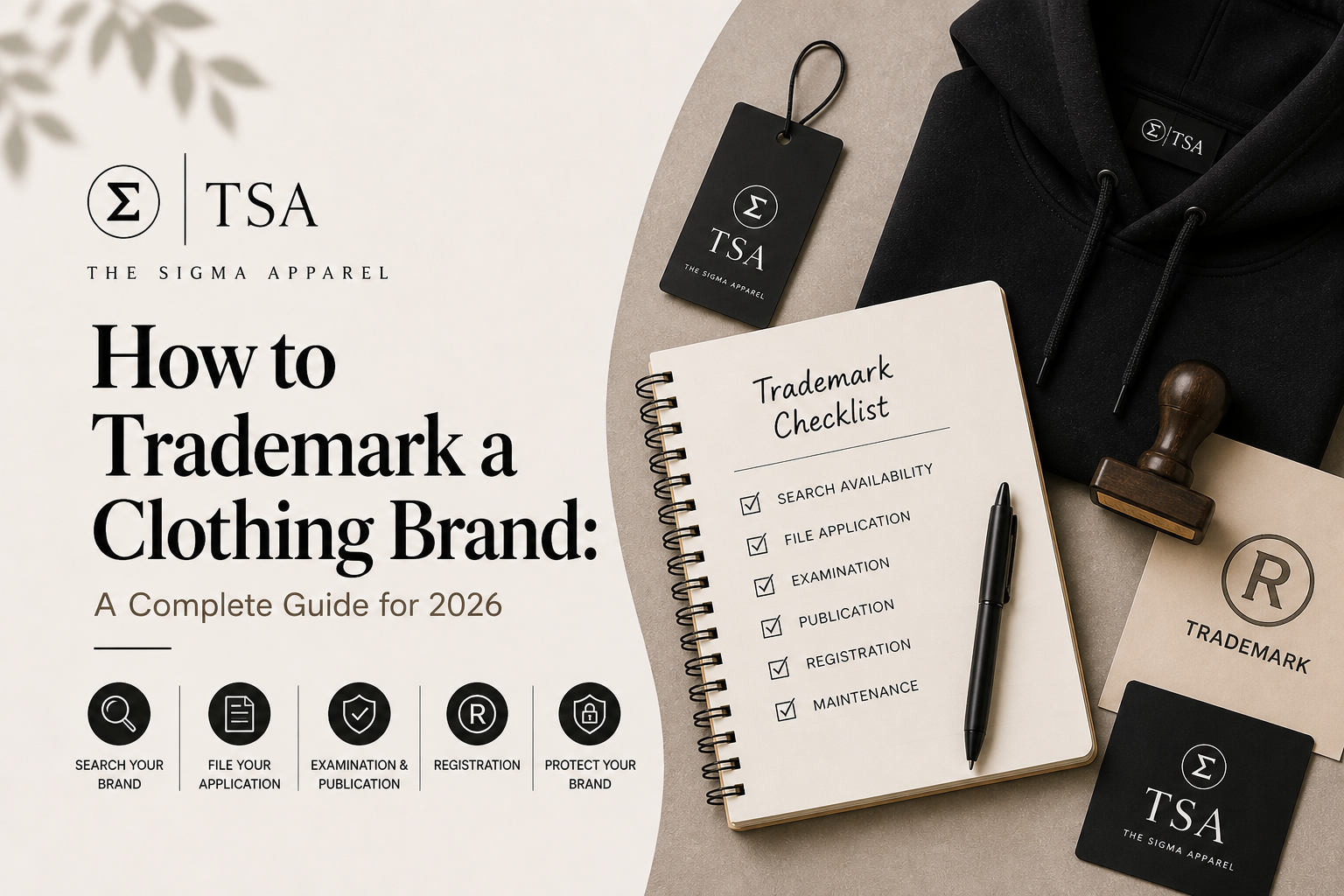
Step 1: Conduct a trademark search
Before filing, search the USPTO (United States Patent and Trademark Office) TESS database at tess.uspto.gov for existing trademarks that are identical or confusingly similar to yours. Also search Google, social media, and domain registries. A mark cannot be registered if it is likely to cause confusion with an existing registered mark.
Step 2: Determine your trademark class
Clothing trademarks are registered under International Class 25 (clothing, footwear, and headgear). If you also sell accessories, bags, or other items, you may need to register under additional classes (Class 14 for jewellery, Class 18 for bags, etc.).
Step 3: File your application with the USPTO
Applications are filed online at USPTO.gov. You will need: your mark (name and/or logo), the goods it covers (e.g. ‘clothing, namely t-shirts, hoodies, and jackets’), your basis for filing (use in commerce if you are already selling, or intent to use if you are not yet), and a specimen showing the mark in use (a product label, hangtag, or website screenshot). The filing fee is $250–$350 per class depending on the application type.
Step 4: Examination and response
A USPTO examining attorney will review your application within 3 to 6 months. They may issue an Office Action requesting clarification or raising objections. You have 3 months to respond to an Office Action. Common issues include likelihood of confusion with existing marks and descriptiveness of the mark.
Step 5: Publication and registration
If approved, your mark is published in the Official Gazette for a 30-day opposition period, during which third parties can oppose the registration. If no opposition is filed (or opposition is resolved in your favour), your trademark is registered and you receive a registration certificate.
International Trademark Registration
A US trademark only protects you in the United States. If you are selling internationally — in the UK, Canada, Australia, or Europe — you will need separate registrations in each jurisdiction. The Madrid Protocol allows you to file a single international application covering multiple countries through WIPO, based on your home country registration. This is significantly more cost-effective than filing separately in each country.
How Much Does It Cost to Trademark a Clothing Brand?
USPTO filing fees are $250–$350 per class. Attorney fees for a straightforward trademark application typically range from $500–$1,500. Total cost for a single US trademark (name and logo filed as separate marks in Class 25) typically ranges from $1,000–$3,000. International registration via the Madrid Protocol adds $500–$2,000+ depending on the number of countries covered.
Frequently Asked Questions
Q. When should I trademark my clothing brand?
Trademark as early as possible — ideally before your public launch. Filing an intent-to-use application allows you to secure your mark before you are trading under it, giving you priority over anyone who might try to register a similar mark during your launch phase.
Q. Can I trademark a name that is already a common word?
You can trademark a word that is common in general use but not descriptive of your specific goods. ‘Apple’ is a common word but is a strong trademark for technology products. ‘Cotton Tees’ is descriptive of clothing and would be refused. The more distinctive and arbitrary your brand name, the stronger and more easily registered your trademark will be.
Q. What is the difference between a trademark and a copyright for clothing brands?
A trademark protects your brand identity — name, logo, and marks used to identify your brand’s products. Copyright protects original creative works — in clothing, this can apply to original textile prints or artistic designs on garments. They are complementary protections, not alternatives. Most clothing brands benefit from both.
Q. Do I need a lawyer to trademark my clothing brand?
You can file a trademark application yourself through USPTO.gov. However, trademark law is complex and errors in filing can result in rejection or weaker protection. For most clothing brands, using a trademark attorney for at least the initial clearance search and application is a worthwhile investment.