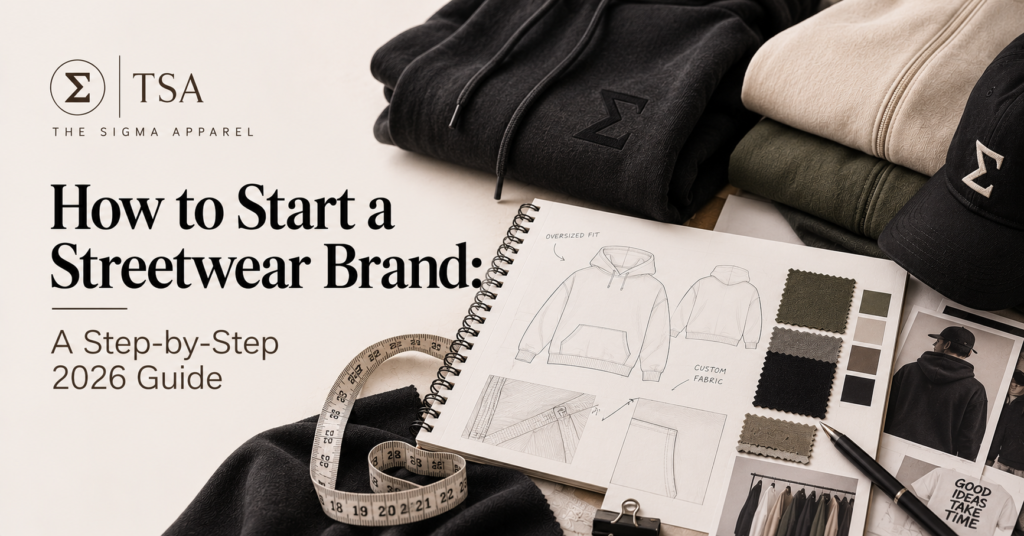
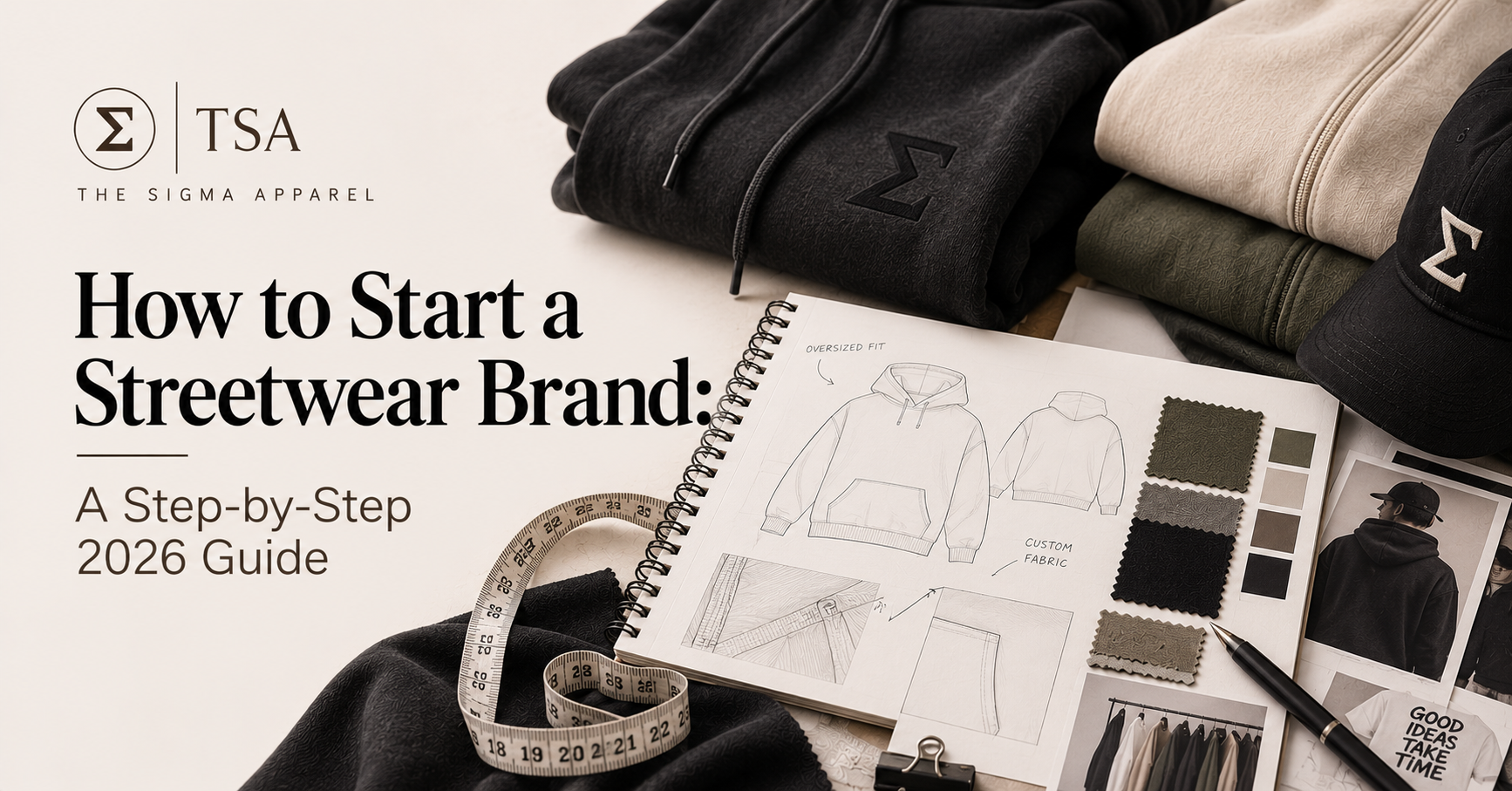
Streetwear is one of the most competitive and community-driven corners of fashion. A great hoodie alone will not build a brand. The story, the drop strategy, the quality and the sense of belonging all matter, and customers in this space are unusually quick to spot a brand that is copying a trend rather than saying something. At the same time, the barriers to entry are lower than they have ever been. You do not need a huge budget, a studio in a fashion capital or a famous name to start. You need a clear idea, a disciplined first collection and a manufacturer you can trust.
This guide walks through the practical steps in the order you will actually meet them, with the manufacturing detail that most “how to” posts skip.
Step 1: Define Your Concept and Your Customer
Streetwear is identity. Before you sketch anything, get clear on who you are making clothes for and what the brand stands for. Think about the customer’s age, scene, city and taste. Ask what makes you different, whether it is a design language, a story, a craft detail or a community. Decide which products will lead, usually hoodies and tees, with caps and outerwear later.
A useful exercise is to write a one-page brand brief covering your mission, tone of voice, colour palette and three brands you admire. The point is not to copy them but to understand how they position themselves so that you can deliberately stand apart. A brand built on a vague “cool clothing” idea has nothing to repeat, and nothing for customers to remember.
Step 2: Set Up the Business Basics
Choose your name carefully and search before you commit, because renaming after you have printed labels and built an audience is painful. Once you are sure, protect it, and our guide on how to trademark a clothing brand explains how. Set up your business entity, bank account and tax registrations properly from day one, and write a simple plan for how you will fund and grow the brand. If you have never done that, our clothing line business plan guide gives you a template, and the cost to start a clothing line article helps you build a realistic budget so that your first order does not drain your marketing money.
Step 3: Design a Small First Collection
The most common mistake in a new streetwear brand is launching too much at once. A capsule of three to five products is plenty, and many successful brands launched with a single hero hoodie and two or three tees. A small range lets you spend your budget on quality and marketing rather than on inventory that may not sell.
Streetwear design choices that matter are fit, weight, graphics, details and finishing. Fit might be oversized, boxy, cropped or relaxed. Weight is a quality signal: heavier fabrics feel premium, and our GSM guide explains how to choose. Graphics might be typography, illustration, puff or 3D prints. Details include custom labels, woven tags and unusual stitching, and finishing covers things like garment dye, acid wash and vintage wash. Choosing fabric deliberately matters too, and our overview of how to choose the best fabric for your clothing brand and our hoodie fabric guide explain the options.
Step 4: Create Tech Packs
A tech pack is the blueprint your manufacturer works from: sketches, measurements, fabric, trims, print placement and construction details. Without one, you are relying on conversations and guesses, and quality and communication suffer. A thorough tech pack is also what lets you compare quotes fairly, because every manufacturer is pricing the same thing.
Step 5: Choose Your Decoration Methods
Streetwear is defined by graphics, so the decoration method is part of the design. Screen printing is cost-effective for bold graphics at volume. Embroidery gives a premium finish for logos. Puff, 3D, foil, flock and discharge prints are popular effects that give streetwear its tactile character, and sublimation suits all-over prints on polyester. Our comparisons of screen printing vs embroidery and sublimation vs screen printing help you choose, and most collections end up using more than one.
Step 6: Find the Right Manufacturer
Your manufacturer shapes your quality, timelines and costs more than almost any other decision. Look for one with experience in streetwear fits and finishes, minimums that match your stage, a proper sampling process, clear communication and transparency about fabric sourcing and terms. Start with our guide on how to find a clothing manufacturer, prepare using the questions to ask a manufacturer, and make sure you understand minimum order quantities before you promise a drop date.
The Sigma Apparel supplies streetwear manufacturing with a 100-piece minimum per style, covering hoodies, t-shirts, jackets and hats. For smaller quantities we source the closest available match in colour and specification from ready-made market fabric, subject to availability, and custom-knitted fabric to your exact specification requires 1,000 pieces.
Step 7: Sample, Test and Refine
Never skip sampling. Check fit, fabric, print quality and how the garment survives washing. Learn the stages in our guide to garment samples, and wash-test every sample several times. Many brands approve a sample that looks perfect on the table and then discover problems with shrinkage, print cracking or twisting seams after laundering. The cost of finding that out at the sample stage is tiny compared with finding it out on a full run.
Step 8: Plan Your First Production Run
Keep your first run small and focused on the size distribution you expect to sell. Plan realistically for time: our standard production estimate is around 17 business days, which is a guide rather than a guarantee, and production pauses whenever it is waiting for your approvals, so quick sign-offs keep the schedule moving. Allow for shipping, storage and fulfilment. And read the manufacturer’s terms and conditions so that you understand how orders, approvals, cancellations and shipping work before you pay.
Step 9: Build Your Brand Presence
Streetwear brands are built in public. You need a website that sells, whether on Shopify or WooCommerce, with strong photography. You need social media with a consistent look and voice, because Instagram and TikTok are where most streetwear customers discover brands. Content such as lookbooks, behind-the-scenes production and the founder’s story gives people a reason to care. Community is the real multiplier, through local events, collaborations and ambassadors who genuinely wear the product. And start building an email list before launch, because it is the one audience you own.
Step 10: Launch With a Drop Strategy
Streetwear thrives on scarcity and storytelling. Limited drops with a countdown create urgency. Pre-orders validate demand and reduce the risk of unsold stock, which is especially useful with a first collection. Collaborations with artists and creators bring new audiences. Restocks of proven bestsellers, announced carefully, turn early buzz into sustainable revenue. The key is to treat each drop as a story with a beginning and end rather than a catalogue upload.
Common Mistakes to Avoid
The mistakes that sink new streetwear brands are remarkably consistent. They launch too many styles at once, skip samples to save money, choose fabric on price alone, ignore trademark checks, underprice products by forgetting overhead and marketing costs, and have no clear brand story. Our article on why clothing brands fail goes through the wider pattern, and if you want a general roadmap for the whole journey, our guides on how to start a clothing line and start a clothing brand from scratch fit alongside this one.
Frequently Asked Questions
How much does it cost to start a streetwear brand?
It depends on your range and volumes, but a small capsule collection can start from a few thousand dollars. Our cost guide breaks it down.
Do I need to know how to design?
Not necessarily. You need a clear concept and a way to communicate it. Many founders work with freelance designers.
What products should I launch with?
Start with hoodies and tees, which are the staples, and add caps and outerwear later.
How many pieces should I make first?
Many manufacturers have minimums. At The Sigma Apparel it is 100 per style.
Do I need a tech pack?
Yes, because it avoids costly misunderstandings.
Should I do print on demand or manufacture?
Print on demand lowers risk but limits quality and margins. Manufacturing offers control and better margins at volume. Our article on wholesale vs private label explains the trade-off.
Can I start a streetwear brand with no experience?
Yes, but plan carefully, start small and learn from each drop.
Ready to Make Your First Drop?
Contact The Sigma Apparel with your designs and quantities, or start with our private label services.